Prepare the information before opening a payment screen
Have the correct bill, intended amount, due date and reference requested by the chosen channel available. If you manage several electricity supplies, identify which one this transaction concerns. Close old payment screens so that documents do not become mixed up. Start when you have time to read the summary carefully and will not need to hand your device to another person halfway through. An organised start reduces avoidable confusion later.
Prefer a device you use personally and know to be functioning normally. Keep the operating system and app updated through their official update mechanisms. If a shared computer is your only option, consider whether another official channel would be more suitable. Avoiding saved passwords on that computer is useful, but it does not replace assessing the device as a whole. A payment session should begin in an environment you understand.
Supplier website: verify the address before signing in
Find the address through verified supplier information, such as your actual bill. Read the full domain in the address bar. A similar spelling, additional word or different ending can lead somewhere else. Do not rely only on the page design, logo or position of a search result. An advertisement requires the same check as any other destination. Once you have verified the address, a personal bookmark can help you return to it directly.
HTTPS indicates a protected connection to the particular domain, but does not establish who operates it. If your browser displays a certificate warning, do not bypass it to reach a form. When the address or warning is unclear, stop and ask the supplier through independently verified contact information. A convincing message claiming that a payment is urgent does not remove the need to verify where you are being asked to go.
Supplier app: install it from a verified source
If the supplier offers an app, locate it through a link on the official website or the supplier’s own instructions. Check the publisher on the official app platform. A name resembling the brand is not sufficient. Avoid installation files attached to messages promising a discount, faster payment or a mandatory update outside the normal process. Read the official description to understand which account functions the app actually provides.
Inside the app, confirm the selected supply and bill. A saved login makes access convenient but does not ensure that the correct property is selected. Check whether the amount is current and whether a payment is already indicated. Features differ between apps; follow the instructions for the one you are using. Do not expect a familiar button sequence from another provider to describe this app accurately.
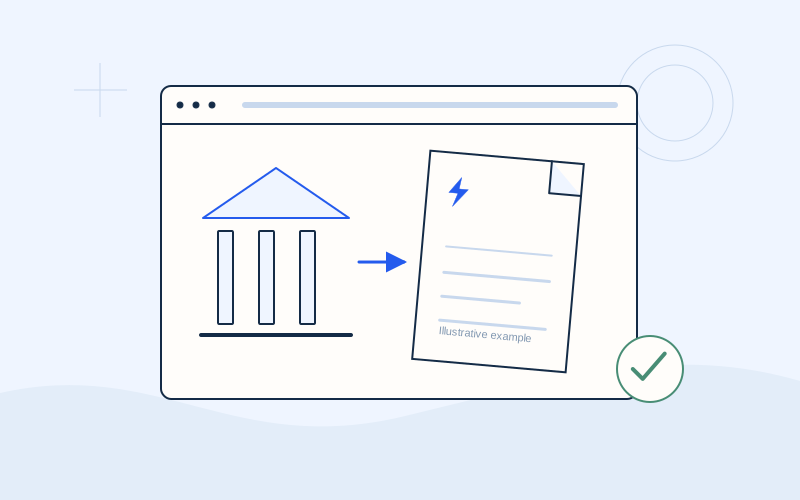
Online and mobile banking use the bank’s environment
With digital banking, the payment starts at the bank. Open the official service as you normally do and locate the relevant payment function. Select the appropriate recipient and debit account. Where reference scanning is supported, review the details inserted automatically. The required reference may differ from a customer or supply number prominently shown at the top of the bill. Read the label on the document before entering a number.
A saved previous payment can be a useful starting point, but the amount, reference and date need a fresh check. A smaller mobile screen may shorten or hide part of a description. Open the full summary before approving it. If you cannot find the supplier, ask your bank for instructions instead of choosing a recipient with a similar name. This avoids treating an uncertain selection as a harmless shortcut.
Review the final summary, not only the first form
Before authorisation, read the amount, currency, reference, recipient where displayed and execution date. Check the debit account if one was selected. Read any disclosed charge separately. Do not infer that a transaction is free because no charge appeared on the opening page. The responsible organisation’s current information is the source for the applicable conditions. What matters is the instruction being submitted, including details added during the process.
Stop if the summary shows a different amount or reference from the bill you intended to pay. Check whether an older saved value was used, a decimal separator was misread or another supply was selected. Correcting an entry before approval is generally more straightforward than investigating an instruction already submitted. If you cannot explain a change between the entry screen and summary, obtain clarification before proceeding.
Authorisation must match the transaction you started
Authentication depends on the bank and channel. It may involve confirmation through the official app or another documented step. Read the details shown in the request and check that they correspond to your transaction. Do not approve an unexpected request when you have not started a payment. Contact the bank through its official channel instead. A notification should be interpreted using its actual transaction details, rather than the assumption that it must be routine.
Do not disclose a PIN, password, one-time code or recovery code through a phone conversation, email or chat. A legitimate process may require entering a code only within the verified environment where it belongs. EPOS Electro has no such fields. Do not let an unfamiliar person control your device to help you authorise a payment. Assistance should explain official steps without taking over your credentials or approval decisions.
Understand a transition to another environment
Some official processes may include a separate environment to handle the transaction. Read the supplier’s explanation before the transition and check whether the new screen matches it. Do not assume that every domain change is expected. If the destination cannot be identified, use the supplier’s support service before entering sensitive information. A transition should be understandable in the context of the process you deliberately started.
When returning to the original service, check the result it reports. A closed tab is not a receipt, and remaining on a page does not mean you should repeat an instruction. EPOS Electro is not involved in external transactions and cannot see what happened there. The channel’s information and official transaction history are the appropriate places to check. Keep the bill reference available while you investigate a result.
Scheduled, pending and completed are different statuses
Read the precise status supplied by the system. A scheduled payment records an instruction for later execution. A pending indication requires the channel’s explanation. Do not interpret either one automatically as a settled bill. Also check whether a message confirms only authentication or whether there is a separate transaction confirmation. These stages may be shown on different screens, and the history may offer more detail than the final notification.
After an interruption, look for the transaction in the official history before starting again. If the result remains unknown, ask the bank or channel to check its status. Retain any transaction identifier and the message displayed. There is no universal waiting period that resolves every problem, particularly where an incorrect amount or reference was entered. Checking the actual instruction is more useful than guessing from the appearance of the screen.
Keep a receipt and an organised personal record
Download the official receipt where provided, or retain the completed history entry. Check that the file concerns the same transaction and includes enough information to identify it later. Name it in a way that helps you find the billing period and supply without exposing complete account numbers in a location used by several people. Keep a scheduling confirmation separate from evidence that the instruction was executed.
If support needs the record, remove unrelated transactions and unnecessary personal information. Store it with the bill and any official response about the balance. A personal note saying paid can help organisation, but does not replace the channel’s official record. Sign out when finished, particularly on a shared device. The organisations handling the payment can explain which records are useful for a specific enquiry.
Common errors you can prevent
Frequent sources of confusion include an old PDF, a reused saved amount, a supply number entered instead of a payment reference and a manual payment while direct debit collection is expected. Check whether another household member has already submitted an instruction. At the final screen, compare details with the current document rather than relying on memory. A short repeatable check is easier to use consistently than a long list recalled under time pressure.
If you discover an error after submission, avoid improvising a correction through a second transaction. Read the official cancellation information or contact the bank and supplier. Explain what instruction you submitted and what you intended. Available corrections depend on the stage and method involved. Neither a general article nor a screenshot can guarantee a refund. Obtain the responsible organisation’s instructions for the actual transaction before deciding on the next step.
Frequently asked questions
Do I need an account to read this guide?+
No. EPOS Electro information is available without banking access. Your supplier or bank may require its own sign-in for a particular payment channel.
Does HTTPS mean a payment page is official?+
No. It protects the connection to the domain you visit, but does not by itself confirm the organisation’s identity. Verify the address and where you obtained it.
What if a receipt does not appear?+
Check the official history and instruction status. If the result is unclear, ask the payment channel to investigate before repeating the transaction.
Are website and app procedures always identical?+
No. Available functions, fields and authentication differ between services. Follow the official instructions for the process you use and check the result after approval.
Sources and further reading
Alpha Bank · Payments through official banking channelsExternal links. Checked: 06.10.2026.Found something that needs correcting? Write to [email protected].
EPOS Electro is an independent informational website operated by ActivePhones. We provide general information about electricity bills and common payment methods in Greece. EPOS Electro does not process payments and is not an electricity supplier, bank or government authority.