What a one-off online payment involves
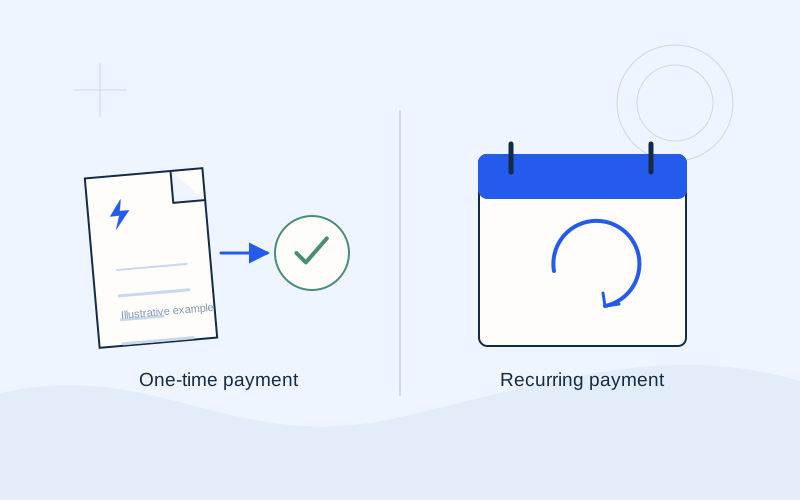
You use an official channel for a particular bill: a supplier website or application, e-banking or mobile banking where supported. You review the recipient, reference, amount and execution date, approve the instruction and retain the receipt. That payment does not by itself activate automatic settlement of every future bill. Check any separate option before agreeing to an ongoing arrangement.
This approach lets you inspect each invoice before approving the transaction. It also requires a dependable reminder and time to complete the process. A saved template makes data entry easier but still needs checking each time. Where scheduling is available, distinguish saving an instruction for later from its actual execution. Approval today may refer to a payment planned for another date.
What changes with direct debit
An authorised collection arrangement can settle bills without re-entering the same payment details each time. For SEPA direct debit, the recipient initiates collection based on the mandate given. Activation takes place through the official process provided by the supplier or bank and under its terms. Read the authorisation carefully before accepting an arrangement you intend to use for future bills.
Confirm what the service covers: which electricity supply, payment source, invoices and notifications. Labels such as automatic payment or standing order can refer to different functions. A recurring transfer of a fixed amount, collection of a variable bill and recurring card charge should not automatically be treated as the same service. Ask what actually happens in the option offered to you.
Monitoring moves to a different stage
With manual payment, much of the checking happens before approval. With an automatic arrangement, review the new bill, planned collection and eventual account movement. Automation can reduce repetitive entry, but it does not resolve unclear charges or incorrect supply details. Reading each document remains useful even when no separate approval is required for the collection.
If notifications are available, find out how to enable them and what they report. Understand which available balance is needed and whether limits or restrictions have been set with the bank. Do not assume every failed collection will be retried automatically. When failure appears, follow the specific official instructions for the outstanding bill and retain a record of the action taken.
Compare the practical demands of each option
If you prefer to inspect every amount and have a reliable reminder routine, a one-off payment may fit that routine. If you manage recurring bills and want less manual input, an available automatic arrangement may be useful. Neither method is universally better for everyone. The decision should reflect how you will review the bill and confirm its settlement in practice.
Compare actual terms rather than broad promises. Check any fees, confirmation method, change procedure, cancellation process and response to failed execution. If a product includes discounts or special conditions, obtain the current details from the supplier. EPOS Electro does not assume a particular saving or guarantee successful settlement through either method. Different channels may also offer different records and notification features.
- How will you learn that a new bill was issued?
- When will you review its amount?
- How will you confirm execution?
- What happens if collection fails?
- How can the arrangement be changed or stopped?
Check the current bill when changing methods
When activating direct debit, ask which invoice will be covered first. An activation confirmation does not necessarily mean the document already in your possession has been settled. Check the current invoice and instructions for any existing balance. Keep activation evidence separately from the eventual payment record, because they demonstrate different stages of the process.
If you intend to pay manually while collection is scheduled, first confirm whether another debit will follow. Hypothetical example: a customer approves an online payment, then notices a planned automatic collection for the same bill. The useful next step is to obtain official guidance about both movements. Do not assume that one automatically cancels the other or that changing a preference reverses a submitted transaction.
Cancellation, account changes and moving home
Stopping an automatic arrangement and settling an outstanding debt are separate matters. Ask how the particular authorisation is cancelled, when the change takes effect and whether collection is already in progress. Retain confirmation and organise settlement of any balance according to supplier instructions. A cancelled setting should not be treated as evidence that nothing remains payable.
When changing a bank account, card, supplier or home, review stored and automatic arrangements. Updating details in one application does not necessarily update every organisation involved. For an unrecognised debit, contact your actual bank and ask which procedure applies to that payment type. This guide does not provide a universal refund deadline or guarantee; the specific arrangement and transaction need to be identified.
Apply the same basic security checks
Verify the official channel before signing in or giving authorisation. Check the website address, use the genuine application and protect banking credentials. An automation label does not prove that an unfamiliar message or page is authentic. An unexpected request for a PIN or one-time code in a conversation is a reason to stop and verify through an independently known official channel.
Whichever method you choose, retain invoices, receipts and relevant confirmations, clearly linked to each electricity supply. EPOS Electro is an independent information website operated by ActivePhones. It is not a bank or supplier, does not activate mandates and does not process payments. Use this information to identify the questions to ask through the official service you select for your actual account.
Frequently asked questions
Is a scheduled online payment always direct debit?+
No. It may be a single instruction for a selected date. Read the channel’s function and terms.
Does cancelling direct debit cancel the debt?+
Changing collection arrangements does not establish what balance remains due. Check outstanding charges with the supplier.
Sources and further reading
Alpha Bank · Payments through official banking channelsPPC / ΔΕΗ · Understanding the electricity billEuropean Payments Council · SEPA Direct Debit mandatesExternal links. Checked: 06.10.2026.Found something that needs correcting? Write to [email protected].
EPOS Electro is an independent informational website operated by ActivePhones. We provide general information about electricity bills and common payment methods in Greece. EPOS Electro does not process payments and is not an electricity supplier, bank or government authority.